 Davenport, IAFresh Thyme Davenport, IAFresh Thyme Marketregional retailerView Store →
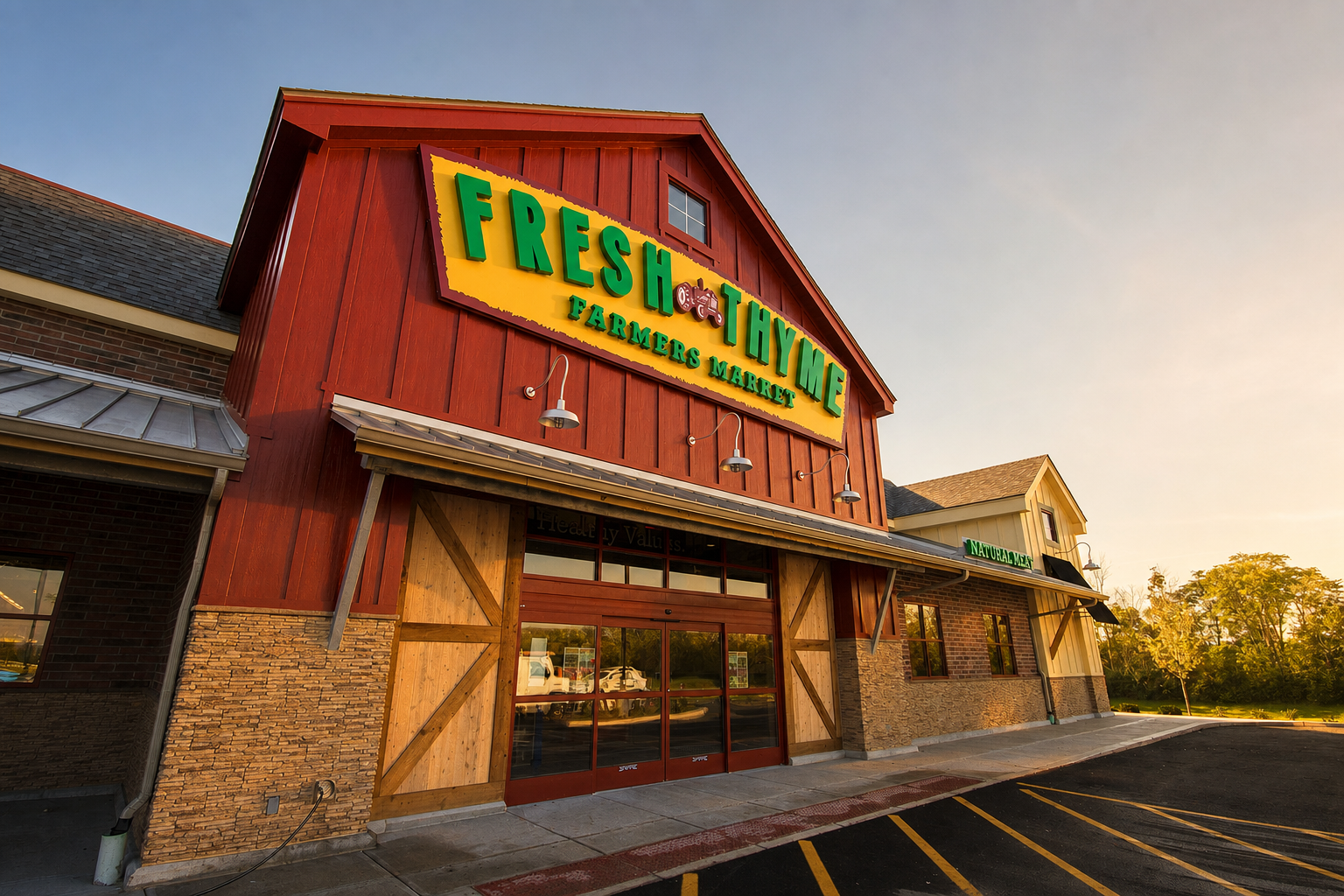
Featured retailer
Fresh Thyme Market
A regional fresh-and-natural grocer focused on accessible wellness, produce and local assortment across Midwestern markets.
HeadquartersDowners Grove, Illinois
Founded2014
Company-reported stores69 · as of 2026-10-17
Mapped locations69 verified records
Retailer typeRegional Chain
OwnershipPrivately held; backed by Meijer
Account orientation
What Kind of Account Is This?
- Primary retailer class
- Regional Natural / Specialty
- Account type
- Regional / multi-regional natural retailer
- Scale
- Regional
- Retail format
- Regional Chain
- Natural orientation
- Major accounts
- Geography
- Midwest
Geographic footprint
Geographic Footprint
69 verified locations · 10 states
Location coverage: Complete official active store directory extraction. Audited October 17, 2026.
Physical stores
Explore individual locations.
Each verified door has its own Store profile and remains connected to this retailer, its market and nearby natural retail.
Davenport, IAFresh Thyme Davenport, IAFresh Thyme Marketregional retailerView Store →West Des Moines, IAFresh Thyme West Des Moines, IAFresh Thyme Marketregional retailerView Store →Bloomington, ILFresh Thyme Bloomington, ILFresh Thyme Marketregional retailerView Store →Chicago, ILFresh Thyme Chicago, IL - BucktownFresh Thyme Marketregional retailerView Store →Crystal Lake, ILFresh Thyme Crystal Lake, ILFresh Thyme Marketregional retailerView Store →Downers Grove, ILFresh Thyme Downers Grove, ILFresh Thyme Marketregional retailerView Store →Fairview Heights, ILFresh Thyme Fairview Heights, ILFresh Thyme Marketregional retailerView Store →Geneva, ILFresh Thyme Geneva, ILFresh Thyme Marketregional retailerView Store →Joliet, ILFresh Thyme Joliet, ILFresh Thyme Marketregional retailerView Store →Naperville, ILFresh Thyme Naperville, ILFresh Thyme Marketregional retailerView Store →River Forest, ILFresh Thyme River Forest, ILFresh Thyme Marketregional retailerView Store →Bloomington, INFresh Thyme Bloomington, IN - WestFresh Thyme Marketregional retailerView Store →Channel relationships
Natural / Specialty Distribution
Only sourced relationships are published. Distribution may vary by region.
Verified distribution relationships not yet published.
Relationships are shown only when supported by an explicit source.
Geographic context
Markets
Explore the markets where this retailer operates.
Retailer intelligence
What to know about Fresh Thyme Market
Fresh Thyme is an important Midwestern natural retailer with a neighborhood-scale format and an approachable wellness position.
Regional relevance and local assortment may play a larger role than at a national chain. Category opportunity can differ materially by market.
A regional fresh-and-natural grocer focused on accessible wellness, produce and local assortment across Midwestern markets.
Neighborhood fresh-and-natural market with produce, bulk, grocery, wellness and local products
Health-curious Midwestern households seeking approachable natural products at everyday value
Fresh Thyme opened its first store in Mount Prospect, Illinois in 2014. It expanded quickly across the Midwest, then refined its footprint and brand around neighborhood-scale fresh food, wellness and value.
An approachable Midwestern market making fresh food and everyday wellness easier to explore.
Sources & methodology
Fresh Thyme about us↗Fresh Thyme careers overview↗Fresh Thyme Market mapped-location inventory (secondary source)↗Fresh Thyme Market official store locator↗
Last updated July 30, 2026. Store counts and operating footprints change over time. Read Data & Methodology →