Visual history

Natural Channel Timeline

Before the bulk bins and national chains: explore the ideas, buying clubs, farming movements and people that helped shape today's natural channel.

A look back

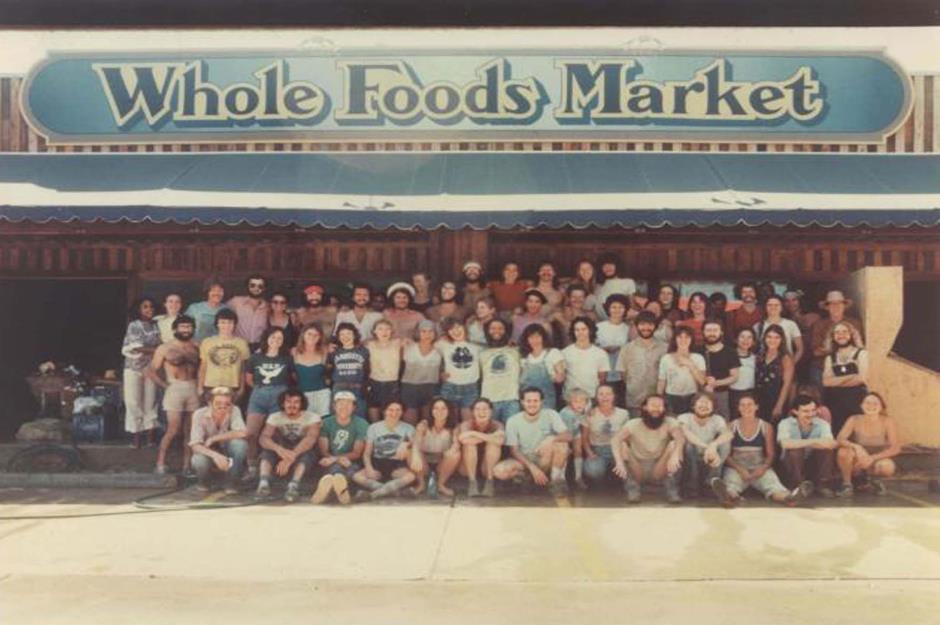
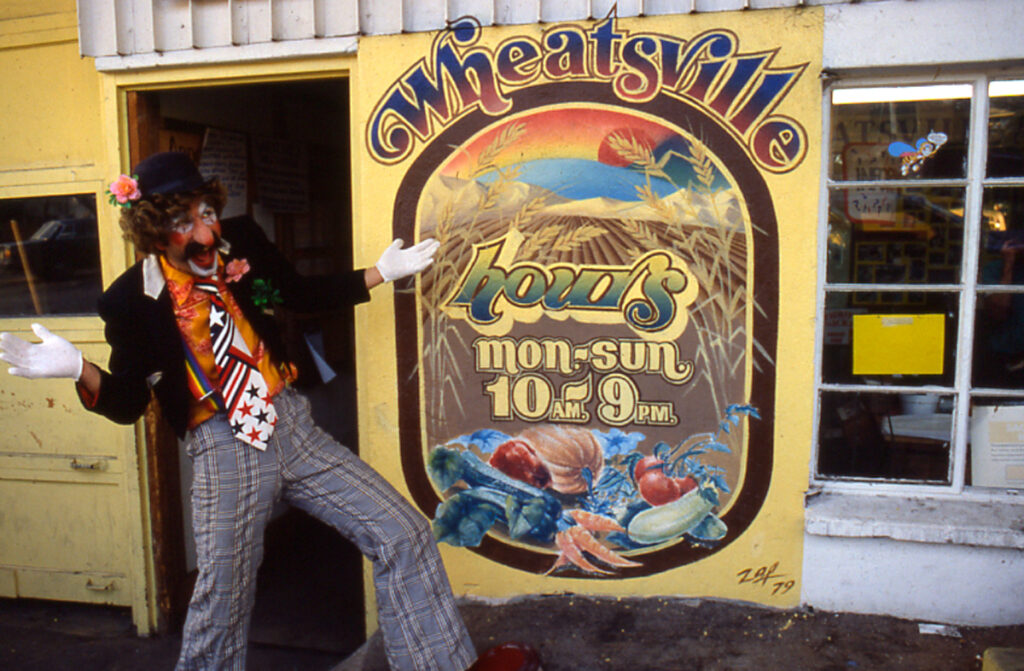
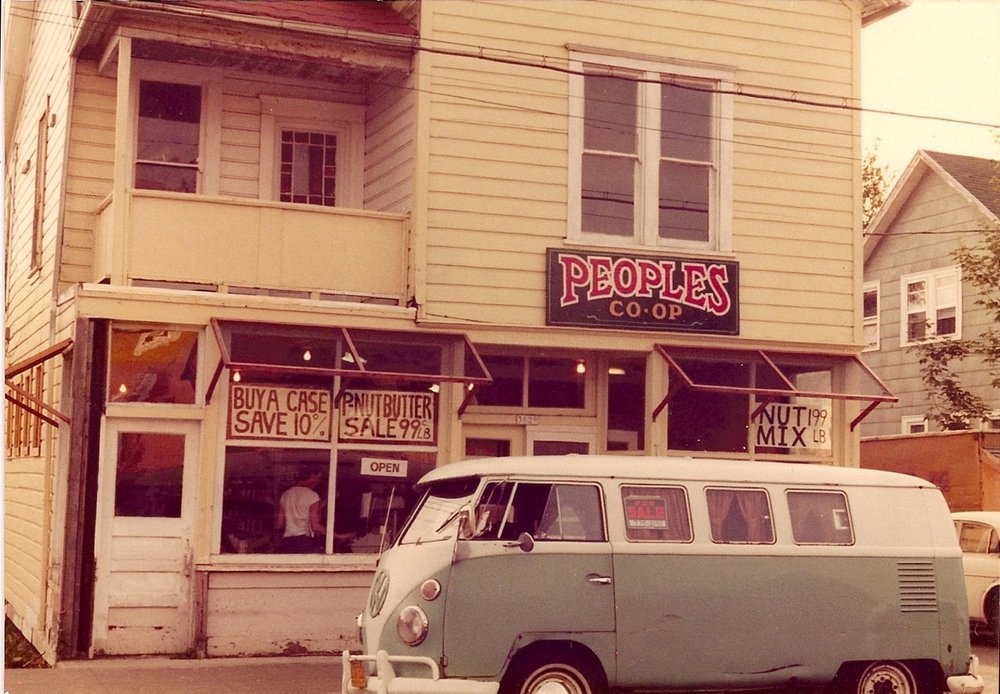
Early Whole Foods Market team gathered outside a storefrontThe team before the national chain ↓Ric Sternberg outside Wheatsville beside its hand-painted sign in 1976Hand-painted signs, neighborhood spirit ↓Volkswagen van parked outside People's Food Co-op in Portland in 1982A co-op and a VW van ↓

Real storefronts. Real people. Explore the photos throughout the timeline, and tap any image to see it larger.

This is a history of an industry taking shape. It brings together several overlapping movements, not a single invention. It describes what people believed and built without endorsing every historical nutrition claim.

See the eras in pictures

Choose a timeframe to open its photo gallery. Each picture includes its date or context and a link to the original source.

  1. Before 1920

    Diet reform before a retail channel

    Vegetarian reformers connected food with physical and spiritual wellbeing long before modern natural-food supermarkets. Whole grains and breakfast cereals were among the ideas and products that emerged from these movements. This is one strand of the industry's history, rather than a single starting point for all food traditions.

    Food advertising before the vitamin era

    A Fleischmann & Company trade card dated 1880–1900 by The Henry Ford. A glimpse of food marketing before the company’s later vitamin-era health advertising.

    Source: From the Collections of The Henry Ford ↗
    An early self-service grocery, 1918

    Clifford H. Poland’s circa-1918 photograph of a Piggly Wiggly interior in Memphis. An example of the broader grocery landscape, not a natural-food shop.

    Source: Clifford H. Poland / Library of Congress ↗
    1 of 2 pictures

    What people believedSome advocates saw simpler, plant-based diets as a path to better health and moral reform. Their beliefs were not all equivalent to today's nutrition evidence.

    How it connectsThe enduring combination of food, personal values and education predates the modern natural aisle.

    Explore the sources
  2. 1910s–1920s

    Vitamins change the conversation

    Research on deficiency diseases made vitamins part of public discussion. By 1920, concentrated vitamin preparations were being sold, and advertisements increasingly linked nutrition with energy and vitality. Researchers and marketers did not always agree on what supplements could deliver.

    Selling health in the 1920s

    A 1920s advertisement shows how marketers used scientific language and medical endorsements. Historical advertising claims are shown as artifacts, not health advice.

    Source: Science History Institute ↗
    1 of 1 picture

    What people believedSome scientists favored meeting vitamin needs with a varied diet; commercial sellers often promised much broader benefits.

    How it connectsFood education and supplement retail developed together, a pairing still visible in health-food stores.

    Explore the sources
  3. 1930s

    Co-ops start with access and affordability

    The Great Depression brought another wave of consumer cooperatives. Communities pooled buying power and organized their own stores. Black communities also built cooperative businesses in response to economic hardship and exclusion. These were broader consumer movements, not all dedicated natural-food stores.

    Shopping together, 1938

    A purchase at the cooperative store in the La Forge project, Missouri, photographed in May 1938.

    Source: Library of Congress / Farm Security Administration ↗
    1 of 1 picture

    How it connectsCommunity ownership and consumer control supplied an organizational foundation that later natural-food co-ops could use.

    Explore the sources
  4. 1937

    Berkeley puts cooperation on the shelf

    The Consumers Cooperative of Berkeley opened a food store in 1937. Its later work included consumer education and food-label advocacy. The co-op began carrying organic produce in 1970 and opened a Natural Foods Center in 1971—showing how an earlier grocery cooperative evolved toward natural foods.

    A Berkeley co-op opening

    An archival Berkeley Co-op opening photograph. The archive does not identify the date here; this is not presented as a photograph of the 1937 founding.

    Source: Berkeley Historical Society and Museum ↗
    1 of 1 picture

    How it connectsThe 1970s co-op wave had predecessors; cooperation itself did not begin with the counterculture.

    Explore the sources
  5. 1940–1947

    Organic farming finds a publishing voice

    Inspired by Albert Howard's work on soil fertility, J.I. and Anna Rodale bought a Pennsylvania farm in 1940. Rodale began publishing Organic Farming and Gardening in 1942 and founded the Soil and Health Foundation, later Rodale Institute, in 1947.

    The Emmaus farm, 1940

    The Emmaus farm that J.I. and Anna Rodale bought in 1940, shown in Rodale Institute’s history.

    Source: Rodale Institute ↗
    1 of 1 picture

    What people believedAdvocates linked soil health with food quality and human health, promoting composting and other ways to rebuild fertility. Historical advocacy should not be read as proof of every health claim.

    How it connectsFarming methods, books and magazines helped give the emerging organic movement a shared language.

    Explore the sources
  6. 1953

    Fifteen families form a buying club

    PCC began as a food-buying club of 15 Seattle families in 1953. Its origins illustrate how a small group could organize access to food before becoming a substantial community-owned retailer.

    The grocery landscape of the 1950s

    A January 1957 supermarket scene shows the grocery setting in which small buying clubs developed. This is a contextual era photograph, not PCC or its founding families.

    Source: Thomas J. O’Halloran / Library of Congress ↗
    1 of 1 picture

    How it connectsBuying clubs could become lasting retail institutions—well before the late-1960s natural-foods boom.

    Explore the sources
  7. 1954–1955

    A back-to-the-land idea meets neighborhood sales

    Helen and Scott Nearing published Living the Good Life in 1954. In 1955, Margaret and Philip Isely began the business that became Natural Grocers, selling door-to-door in Colorado with nutrition books, whole-grain bread and supplements.

    A supermarket aisle in 1957

    Thomas J. O’Halloran’s January 1957 photograph shows the mainstream supermarket setting of the decade. It is contextual, not a natural-food store.

    Source: Thomas J. O’Halloran / Library of Congress ↗
    1 of 1 picture

    What people believedSelf-reliance and food-based wellbeing appealed to different audiences. The Iselys' account describes their personal health motivation; it is a founding story, not clinical evidence.

    How it connectsA movement could travel through books and conversations as well as storefronts. Nutrition education became part of the shopping experience.

    Explore the sources
  8. 1962

    The environment enters the food conversation

    Rachel Carson's Silent Spring challenged how persistent pesticides were being used and described their ecological consequences. It became a landmark in the growing public discussion about chemicals and environmental responsibility.

    Rachel Carson before Silent Spring

    Rachel Carson while working for the U.S. Fish and Wildlife Service, circa 1944—18 years before Silent Spring was published.

    Source: U.S. Fish and Wildlife Service ↗
    1 of 1 picture

    How it connectsFood choices increasingly connected with questions about farming and the wider environment, alongside personal nutrition.

    Explore the sources
  9. Late 1960s–1970s

    The new wave of natural-food co-ops

    Counterculture-era buying clubs and co-ops emphasized whole, unrefined and bulk foods. Some were volunteer-run; others hired staff. Their experiments varied, and many struggled to survive. The durable stores helped establish a market for foods that conventional grocers often did not carry.

    Hand-painted signs, neighborhood spirit

    Wheatsville in Austin, 1976. Ric Sternberg outside a storefront whose colorful sign captures the personality of the early co-op movement.

    Source: Wheatsville Food Co-op ↗
    A co-op and a VW van

    People’s Food Co-op in Portland, 1982. A neighborhood storefront and Mina’s van—small-scale retail with a very different feel from today’s supermarkets.

    Source: People’s Food Co-op archive ↗
    The people behind the counter

    Mina at the counter of People’s Food Co-op, 1982. The co-op’s archive highlights the women who helped build and run the store.

    Source: People’s Food Co-op archive ↗
    1 of 3 pictures

    How it connectsThis is the co-op wave most closely associated with the modern natural-foods industry—not the first generation of food cooperatives.

    Explore the sources
  10. 1971–1974

    Standards and distribution grow around the stores

    Early organic certification efforts took shape in California and Vermont in 1971; California Certified Organic Farmers formed in 1973. In 1974, Veritable Vegetable began distributing organic produce in the Bay Area's alternative food system.

    A whole world on a tea box

    Celestial Seasonings’ Sleepytime artwork. This is the brand’s published illustration, rather than a photograph of a vintage package—a reminder of how storytelling gave natural products a recognizable identity.

    Source: Celestial Seasonings · Iconic Artwork ↗
    1 of 1 picture

    How it connectsStores needed more than enthusiastic shoppers. Certification and distribution helped connect growers, products and shelves.

    Explore the sources
  11. 1980s–1990s

    Natural foods adopt the supermarket format

    Whole Foods Market opened in Austin in September 1980, combining Safer Way Natural Foods and Clarksville Natural Grocery. Expansion beyond Austin began in 1984. Acquisitions of regional natural-food retailers helped extend its reach through the 1990s.

    The team before the national chain

    An early Whole Foods Market team outside the store. The first market opened in Austin in September 1980; the exact date of this photograph is not confirmed.

    Source: Whole Foods Market, via loveMONEY ↗
    Before self-checkout

    Joyce at the People’s Food Co-op checkout in the late 1980s: conversation across the counter, plants in the window and packaged goods on the shelves.

    Source: People’s Food Co-op archive ↗
    1 of 2 pictures

    How it connectsA larger store format and regional expansion changed how many shoppers encountered natural foods.

    Explore the sources
  12. 1990–2002

    Organic becomes a national standard

    The Organic Foods Production Act of 1990 directed USDA to establish national organic standards. After years of development, national rules were implemented in October 2002. Organic certification became a consistent framework rather than only a patchwork of state and private standards.

    A shared organic standard

    The official USDA Organic seal represents certification under national organic standards. Shown here as a historical and educational reference.

    Source: USDA Agricultural Marketing Service ↗
    Organic farming in the national-standards era

    Phil Foster and USDA horticulturist Eric Brennan inspect red chard on an organic farm in San Juan Bautista, California. Published in USDA Agricultural Research’s February 2002 issue.

    Source: USDA Agricultural Research Service ↗
    1 of 2 pictures

    How it connectsA shared standard made organic claims easier to verify across a growing national market. “Natural” and “certified organic” are different concepts.

    Explore the sources
  13. 2000s–2010s

    Values move onto the package

    Consumers increasingly looked for information about how food was grown and animals were raised. Organic certification appeared alongside narrower claims about individual attributes. More information also brought confusion about what different labels actually meant.

    Reading the package

    An FDA educational example of the earlier Nutrition Facts format. This is a label artifact rather than a photograph of a specific product.

    Source: U.S. Food and Drug Administration ↗
    Talking food at a farmers market, 2012

    Cottingham Farm’s Shane Shewbridge talks with customers at the USDA Farmers Market in Washington, D.C. The official photo record dates the image June 1, 2012.

    Source: Lance Cheung / USDA ↗
    1 of 2 pictures

    How it connectsUnderstanding the channel includes understanding the promises on its shelves—and how those promises are supported.

    Explore the sources

An evolving record

The timeline is growing.

These milestones are a starting point, with extra attention to the years before the 1960s. Connections between eras are editorial interpretation; the linked sources document the events. Next chapters can follow the distributors, regional retailers, emerging brands and communities that shaped the channel today.

Explore the channel on the map →